Understand electrical fault finding in Dandenong
Fault finding in a Dandenong home traces a symptom to its cause: a breaker that keeps tripping, a dead room, flickering lights or a warm power point. The culprit might be a loose connection, a failing fitting, a faulty appliance or ageing wiring, and testing shows which.
Warning signs and electrical safety first
Energy Safe Victoria flags a burning smell, sparking and a hot power point as signs to act on, not live with. Stop using that point or appliance, switch it off at the switchboard if you can do so safely, and call 000 if there is smoke or fire.
What a found and fixed fault looks like
The aim is simple: the circuit stays on, the lights hold steady and every point stays cool in normal use. You also know what caused it, whether an appliance was to blame and whether anything else on that circuit should be watched.
How power faults are traced
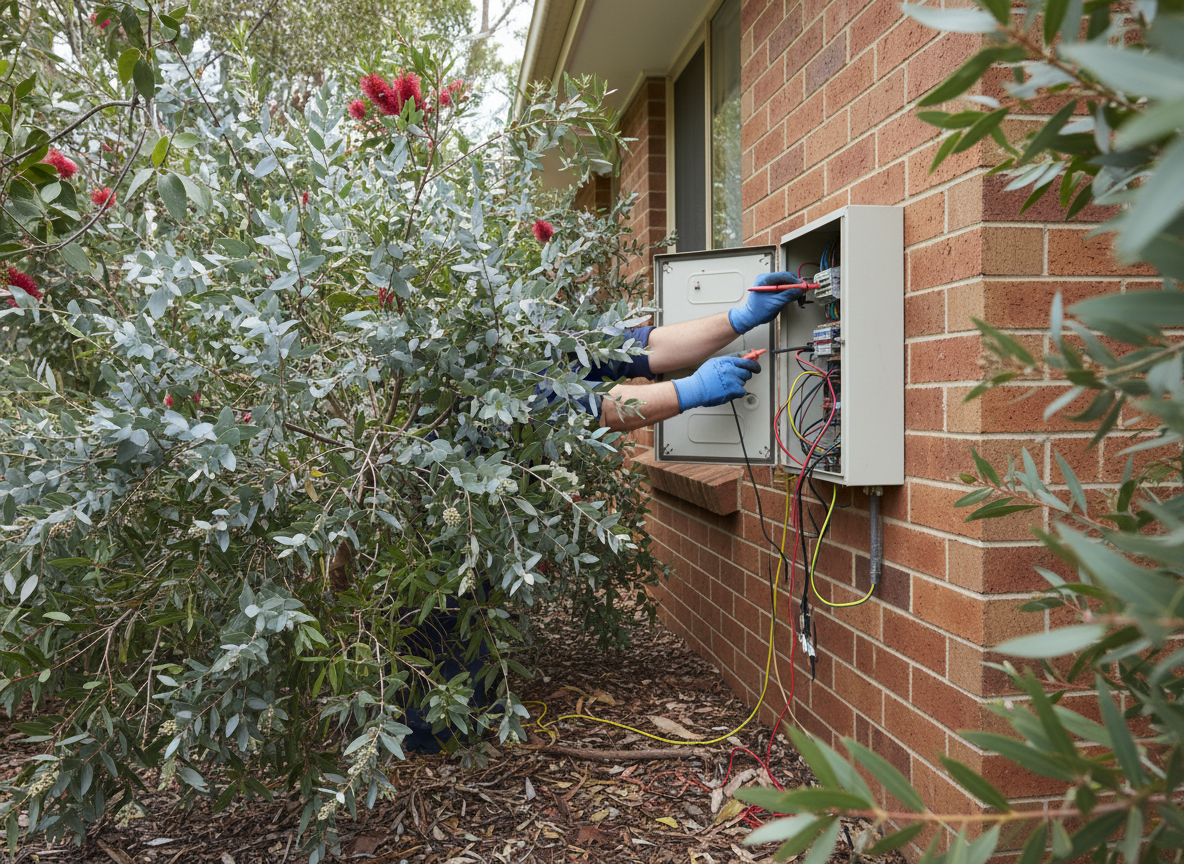
Tracing starts with your description, then the switchboard: which breaker or safety switch dropped and what is on that circuit. Appliances are unplugged and circuits tested one at a time, narrowing the problem to a run of cable, a fitting or a single device.
Why you do not need to know the cause
Naming the fault is not your job. What helps is what you noticed: which rooms or lights, whether it happens when the kettle, heater or washing machine runs, at night or after rain, and roughly when it began. Patterns like these shorten the search.
Does a fault mean a full rewire?
Not necessarily. Many faults sit in one connection, fitting or circuit. A rewire only comes into the conversation when testing shows older wiring failing across several circuits, which can happen in 1970s and 1980s brick veneer homes. Ask for the repair and any rewire option to be priced separately.
Next step for a fault you cannot explain
Note the symptoms, the rooms affected and when it started, plus any recent storms or new appliances. Request a quote here for the fault, and a licensed and insured local contractor can follow up. A photo of the switchboard showing the dropped switch helps too.
Electrical Fault Finding Services We Offer
✓Tripping Circuit Troubleshooting
Working out why a breaker or safety switch drops, whether from an appliance, damp, an overloaded circuit or damaged wiring.
✓Dead Circuit and Power Loss Tracing
Locating the break when one room, a set of points or a group of lights has no power while the rest of the house does.
✓Flickering Light Diagnosis
Checking whether flicker comes from a globe, fitting, dimmer, switch or a loose connection further along the circuit.
✓Older Home Wiring Assessment
Testing ageing circuits in 1970s and 1980s brick veneer homes to see whether a targeted repair or wider rewiring makes sense.
How it works
- 1
Note the symptoms
Record what happens, where in the house, how often and when it first started, including anything that seems to set it off.
- 2
Check the board and appliances
See which breaker or safety switch has dropped and unplug appliances on that circuit to rule them in or out.
- 3
Test circuit by circuit
Each circuit is tested in turn to narrow the fault down to a cable run, a connection, a fitting or one device.
- 4
Repair and confirm
The faulty part is repaired or replaced, the circuit is retested, and you are told what caused it and whether anything else needs attention.